
April 21, 2026
What It Really Takes to Build a Battery Energy Storage System
From site preparation to operation, a behind-the-scenes look at how utility-scale battery projects come together.
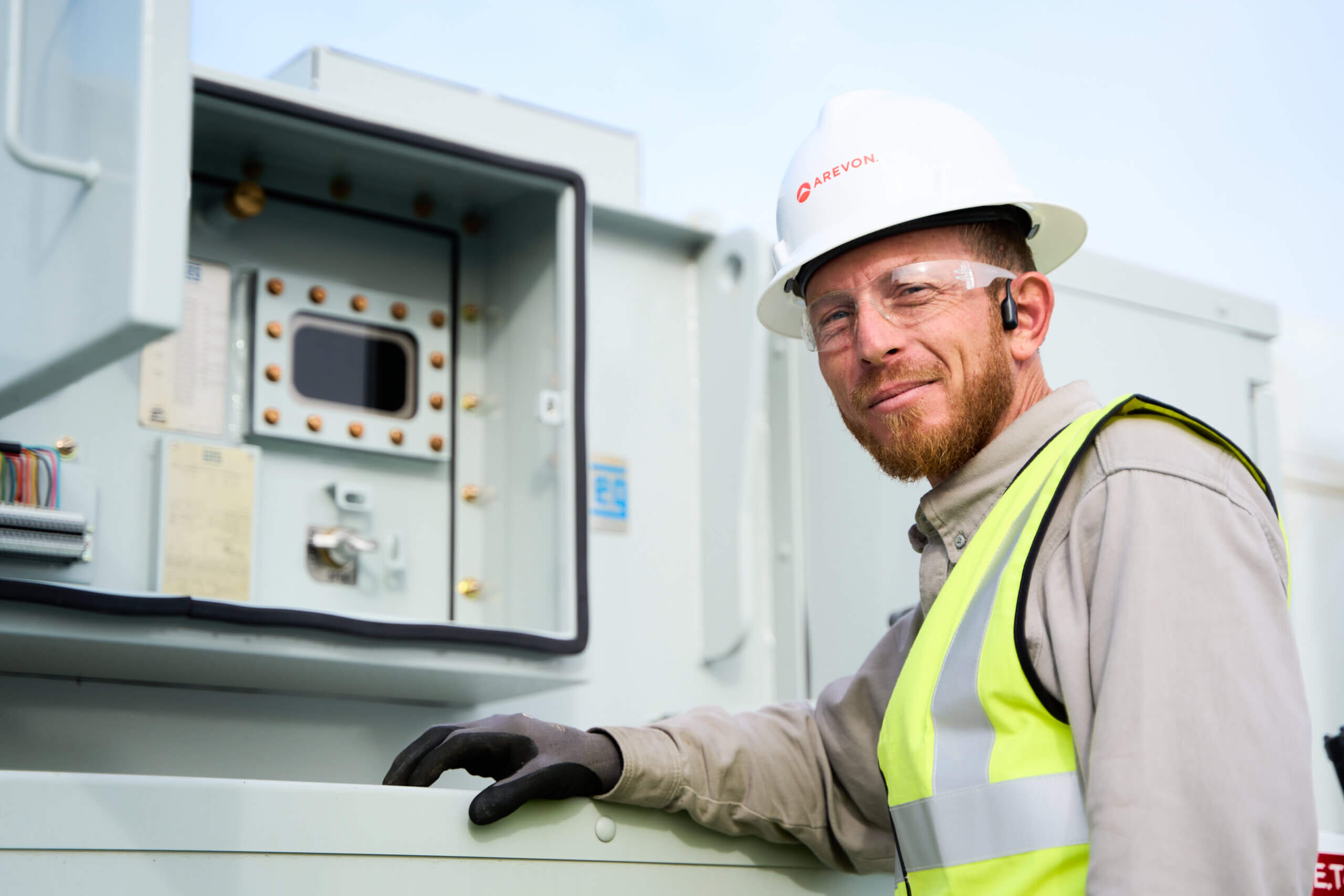
Battery energy storage is becoming a critical part of America’s energy infrastructure. But for many people, what these projects actually look like and how they’re built is still a bit of a mystery. Most people will never see one being built.
This is a look at what really goes into building a grid-scale battery energy storage system (BESS), from early site work through BESS construction and long-term operation
Why Battery Storage Matters
At a basic level, battery storage helps keep the lights on when it matters most.
These systems store electricity when demand and costs are low and deliver it back to the grid when demand is high or the system is under stress. That helps stabilize the grid, reduce price spikes, and prevent outages.
It’s one of the fastest ways to strengthen reliability as demand continues to grow and capacity tightens.
What a Battery Storage System Includes

A utility-scale battery storage system is made up of several integrated components working together:
- Battery enclosures (1), typically housed in engineered containers or outdoor cabinets
- Battery modules (2) made up of Lithium Iron Phosphate (LFP) cells that store and release energy
- Power conversion systems that convert electricity between DC and AC
- Management and monitoring systems that optimize performance, track system health, and ensure system wide safe operation 24/7
These systems are designed to operate continuously, with real-time monitoring and automated controls.
A Small Footprint, By Design
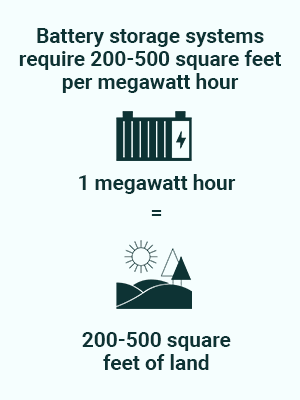
Battery storage has a high energy density, meaning it can store a large amount of power in a relatively small space. Typically, systems require about 200 to 500 square feet per megawatt hour.
For example, a 400 megawatt-hour project can fit on just a few acres while serving hundreds of thousands of homes during peak demand.
That allows projects to be thoughtfully sited while minimizing land impact.
Step 1: Preparing the Site
Before any equipment arrives, the site is carefully prepared.
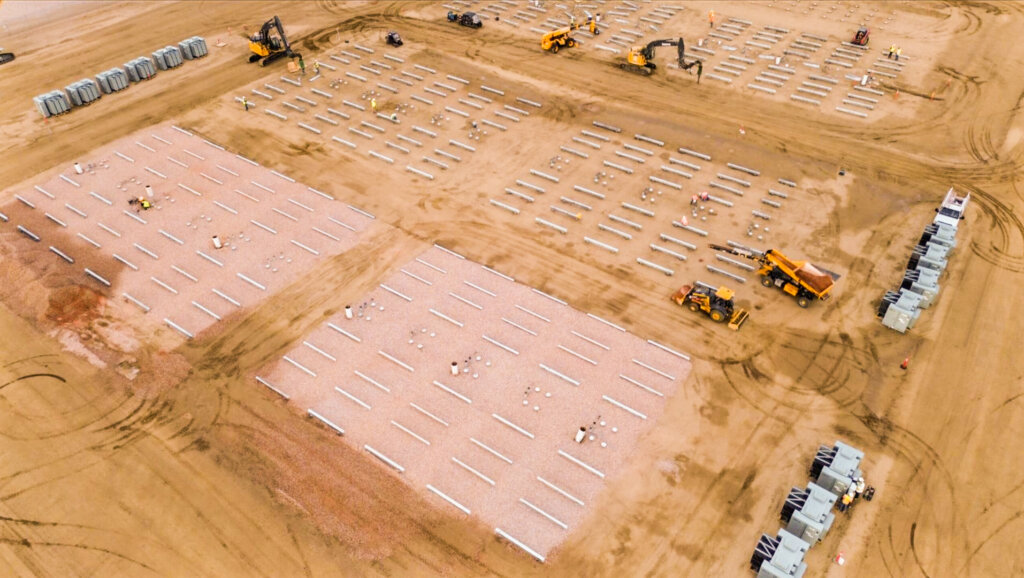
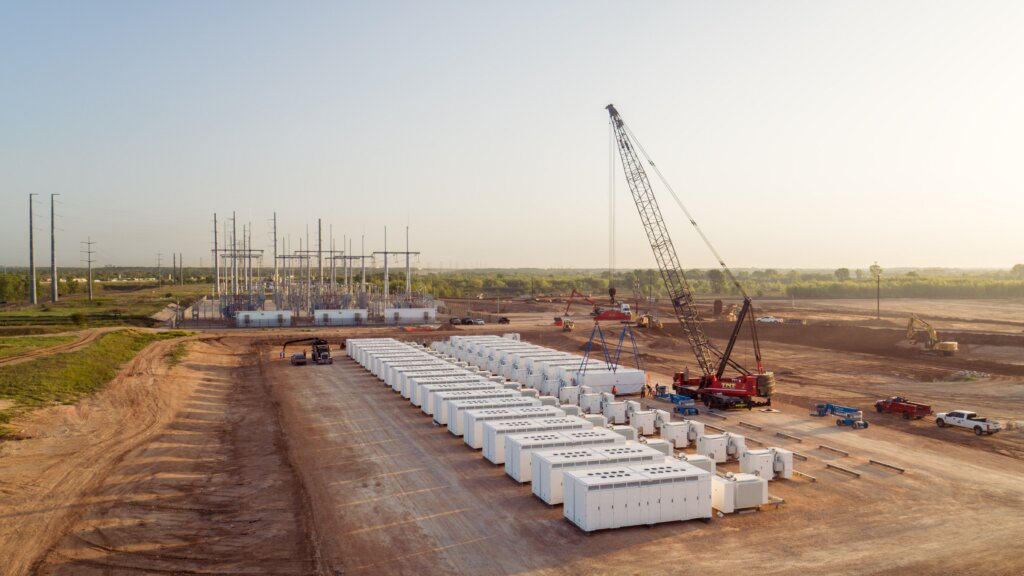
That starts with in-depth site studies that inform the overall design, along with strategies to minimize land disturbance while maximizing safety, stability, and performance. From there, crews clear and level the land, install drainage and erosion controls, build access roads, and secure the site with perimeter fencing.
These early steps lay the foundation for a project that operates safely and reliably, with minimal disruption to nearby communities.
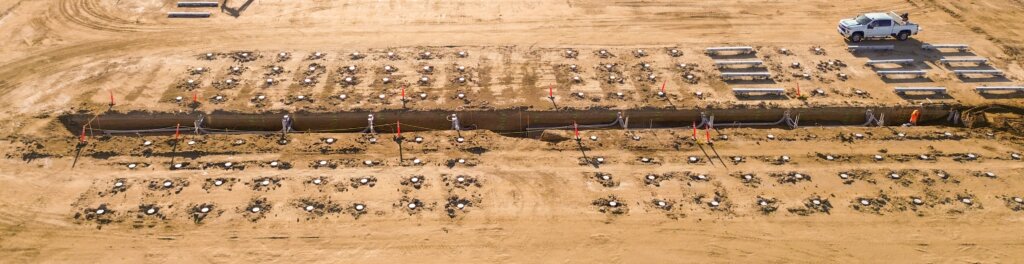
Step 2: Building the Foundation and Installing Equipment
Once the site is ready, construction moves quickly. Each project is unique and shaped by local and regional requirements, but the steps below reflect a typical construction process.
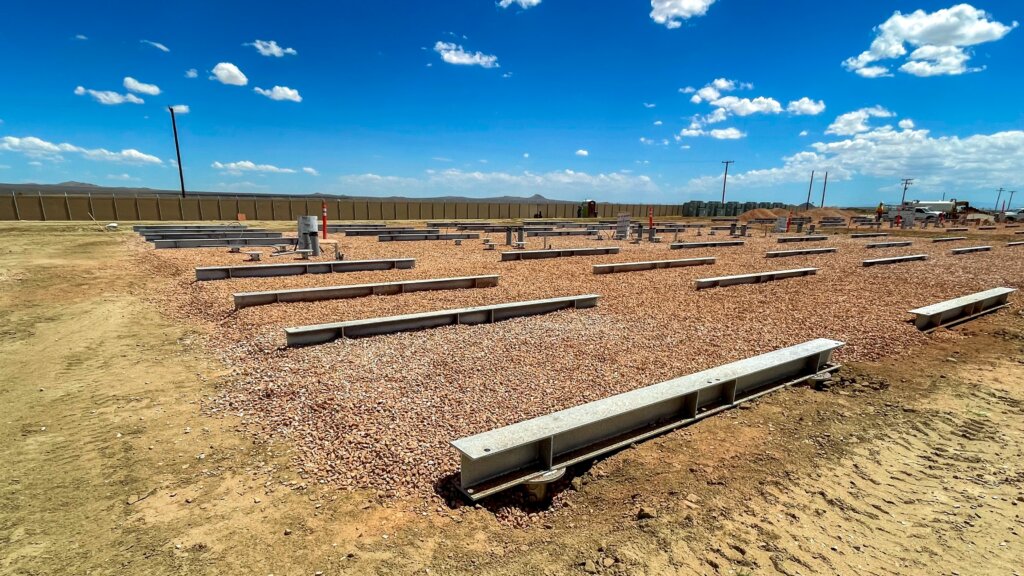
- Steel piles are installed to form the foundation
- Support beams are attached to create a stable platform
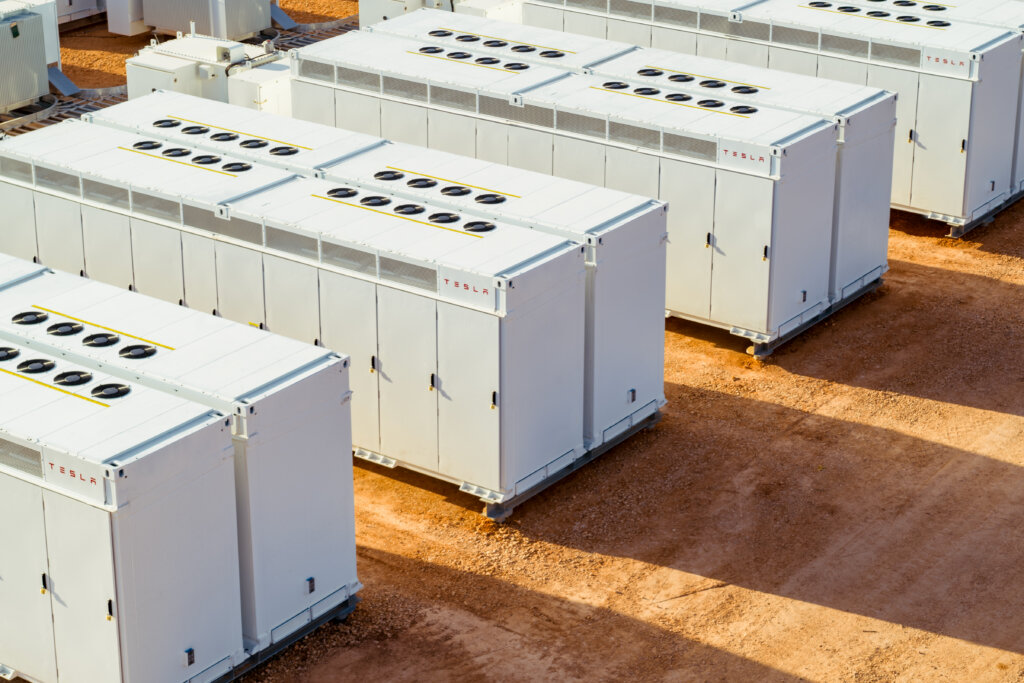
- Battery systems are delivered, often pre-assembled, and set in place
These systems are built to handle extreme conditions, including severe weather and seismic activity, and must meet strict safety and engineering standards.
Step 3: Connecting to the Grid
Every energy project has to go through interconnection, the process of connecting to the existing grid. Each regional grid has its own rules, but all require a rigorous, multi-step study process before a project can be energized.
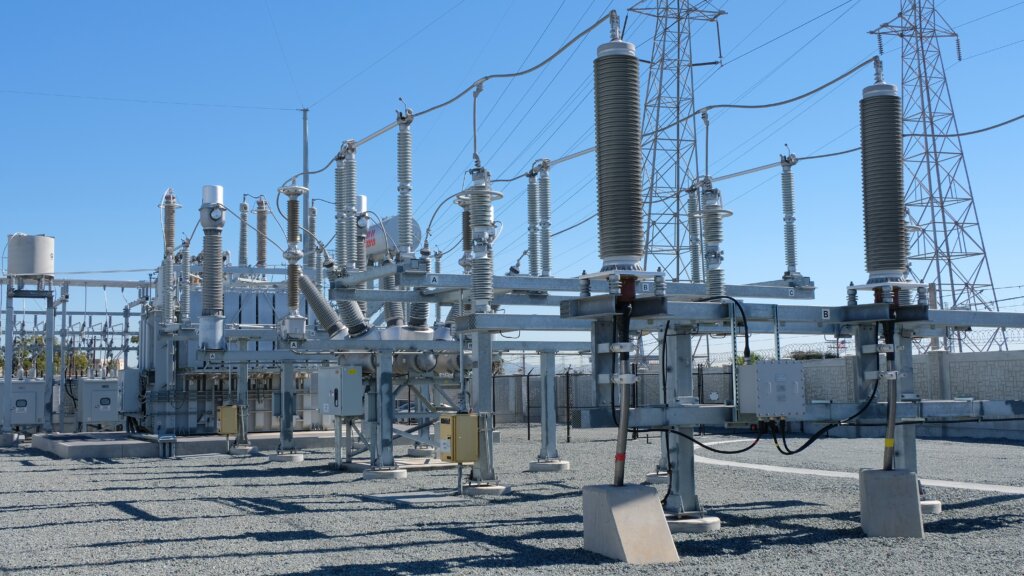
This includes:
- Submitting an interconnection application
- Completing detailed technical studies
- Coordinating with utilities and grid operators
- Identifying and, if needed, funding transmission upgrades
- Completing final testing and securing approvals
It’s a rigorous, multi-step process that can take years, but it ensures the system operates safely and reliably once it’s online.
Step 4: Testing and Commissioning
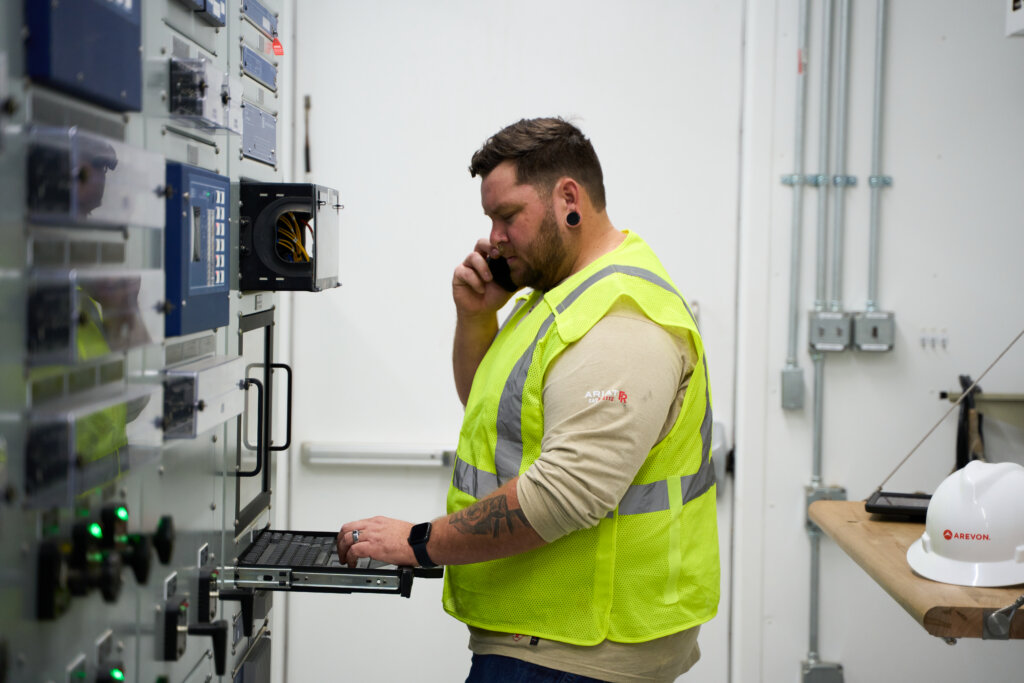
Before a project begins operating, it goes through a full commissioning process.
That includes:
- Verifying mechanical and electrical systems
- Testing battery performance and safety systems
- Confirming compliance with grid requirements, with utility oversight to ensure safety and reliability
Only after passing these checks is the system energized and allowed to deliver power.
What Happens Once It’s Operating
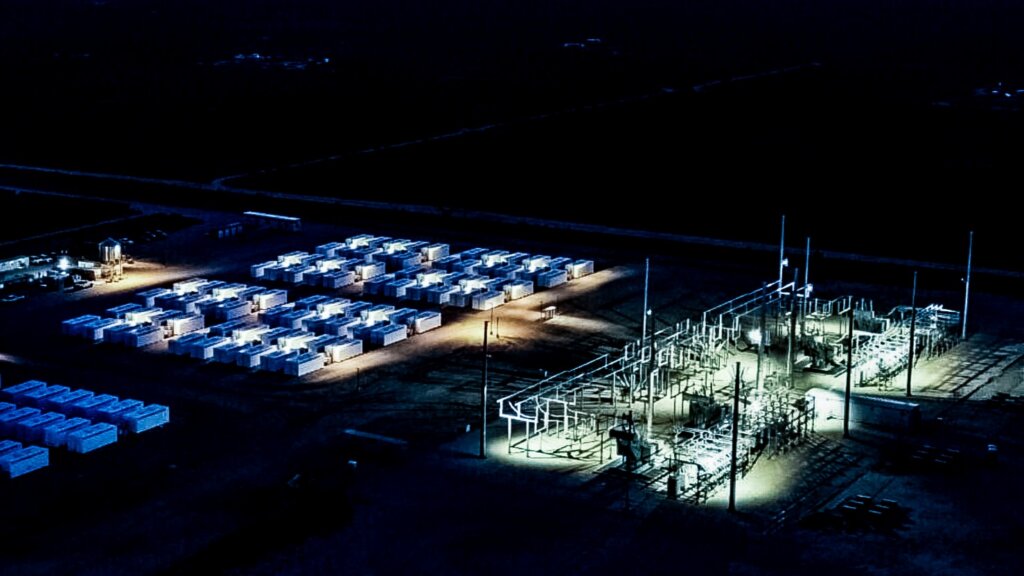
Once online, these facilities are monitored around the clock to ensure performance, safety, and reliability.
Operators track system performance in real time, respond quickly to any issues, and ensure the system continues to meet all regulatory and grid requirements.
The goal is straightforward: deliver dependable power when it’s needed most, even after dark.
The Bottom Line
Battery storage is no longer emerging infrastructure. It’s being built at scale across the country.
In 2025, energy storage accounted for roughly 25% of all new U.S. electricity generation installed, making it one of the fastest-growing sources of new capacity. Combined with solar, that share rises to nearly 80%.
That growth is backed by a rapidly expanding domestic supply chain, with more than 65 battery manufacturing facilities now operating in the United States and nearly 80,000 Americans working in the industry. Our nation is now the second largest battery manufacturer in the world. As demand continues to rise, these projects are helping ensure the grid can deliver power when and where it’s needed most. And they’re doing it while strengthening American manufacturing, supporting a growing workforce, and building infrastructure that will serve communities for decades to come.
This is Arevon
Follow us on LinkedIn for more stories of how we’re powering progress.